
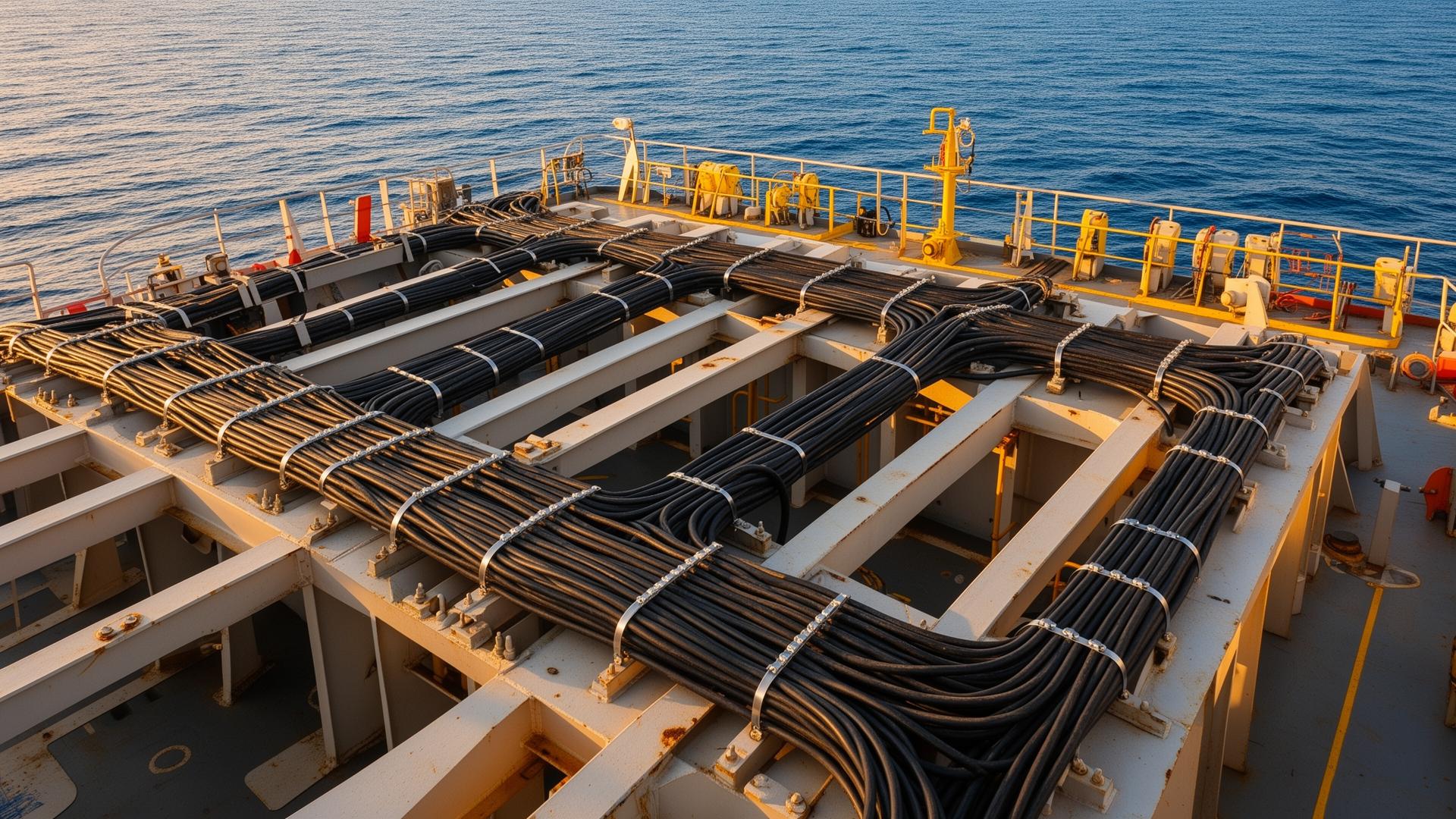
Topside, Deck, and Terminal: Cable Management for the Marine Environment
Marine environments are unforgiving of hardware in a way most industrial settings aren't — salt air alone will corrode unprotected metal faster than almost any other atmospheric condition, and that's before accounting for humidity, temperature swings, and constant vibration from machinery and vessel movement. Anyone specifying cable management for shipyards, port infrastructure, or vessel electrical systems has to think about corrosion resistance as a primary requirement, not an afterthought.
It's also an area where being precise about material grade actually matters, and where a supplier overstating what a product can handle causes real problems down the line. A cable tie that fails inside a switchgear cabinet is inconvenient; one that fails on load-bearing rigging or in a submerged bilge application is a safety issue.
Where SS304 is the right call — and where it isn't
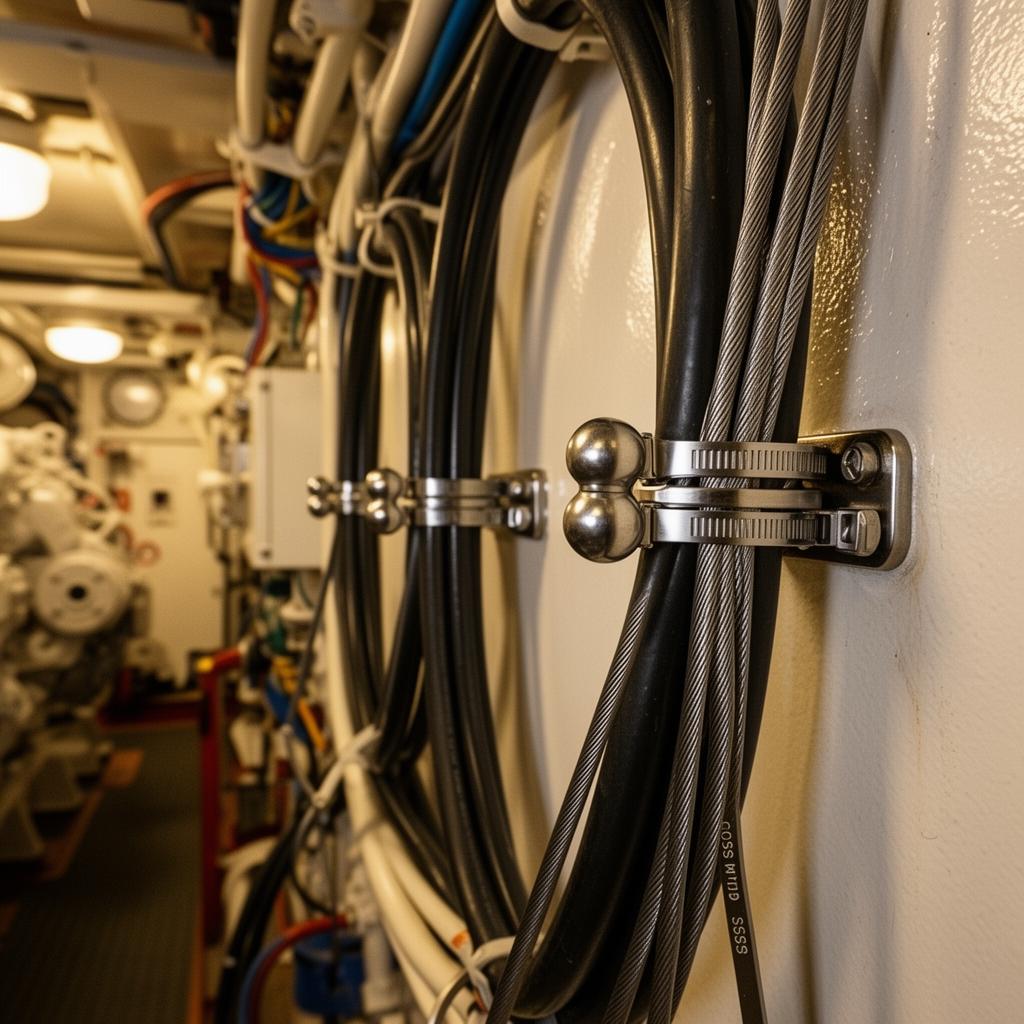
Stainless steel comes in different grades for a reason. SS316 contains molybdenum, which gives it meaningfully better resistance to chloride-induced corrosion — the specific kind of attack that constant saltwater immersion causes. That makes 316 the standard choice for components that sit permanently underwater or in direct, continuous saltwater contact, like subsea cabling or bilge-area hardware.
VLC's cable ties are SS304, a genuinely strong, widely used marine-grade stainless with good general corrosion resistance, but not the same chloride resistance as 316. That makes SS304 a solid, honest fit for the parts of a marine or port environment that see salt air and periodic spray rather than constant immersion: topside and deck-level cable runs, dockside and port electrical infrastructure, shipboard electrical panels and machinery spaces, and crane or gantry wiring at ports and terminals. Where a job genuinely calls for constant submersion or direct saltwater contact, that's a 316 application, and we'd rather say so plainly than sell into a use case our product isn't built for.
Deck and topside wiring
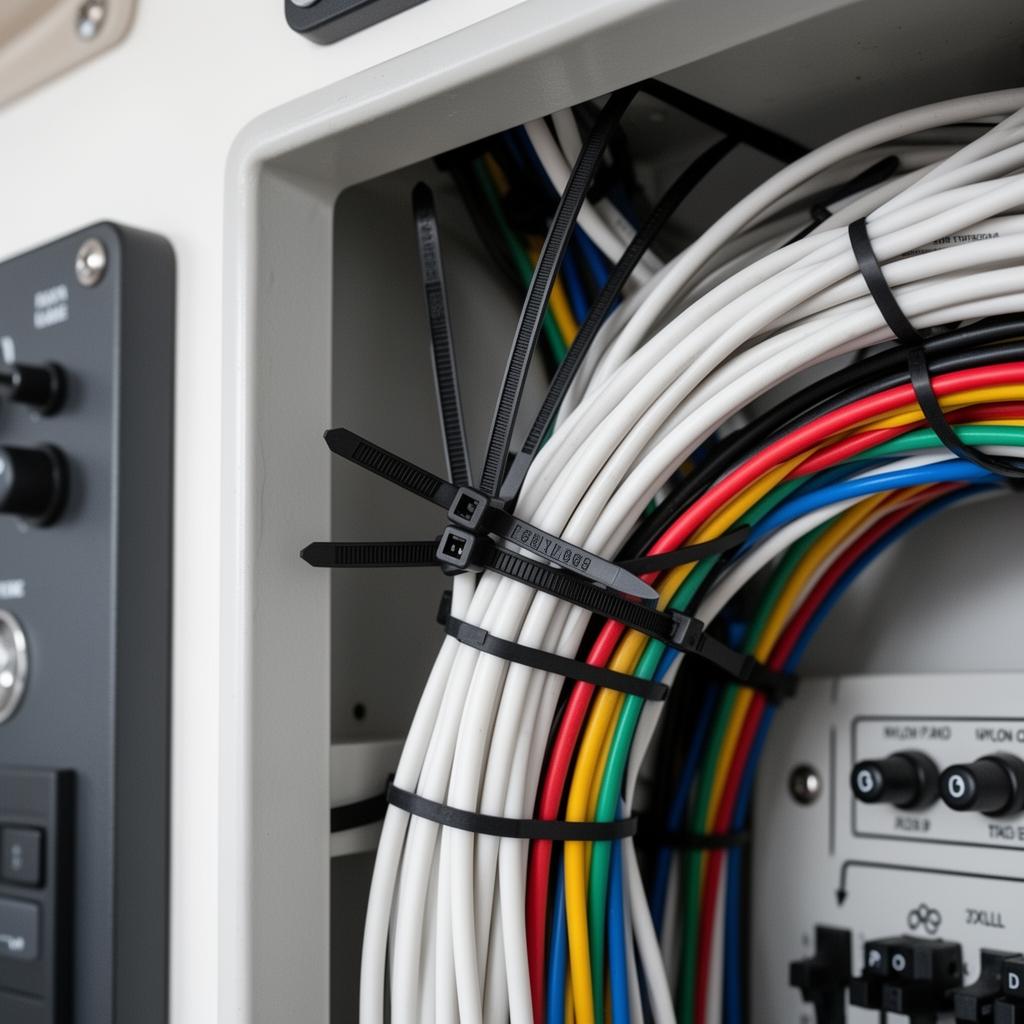
Deck and topside wiring on vessels and offshore platforms takes constant exposure to salt spray and full sun — a combination that degrades standard nylon ties even faster than land-based outdoor use.
SS304 ties (100-250 lbs tensile, rated -80°C to +538°C) handle this range without the corrosion or UV-degradation questions that come with lower-grade materials.
Port and terminal infrastructure
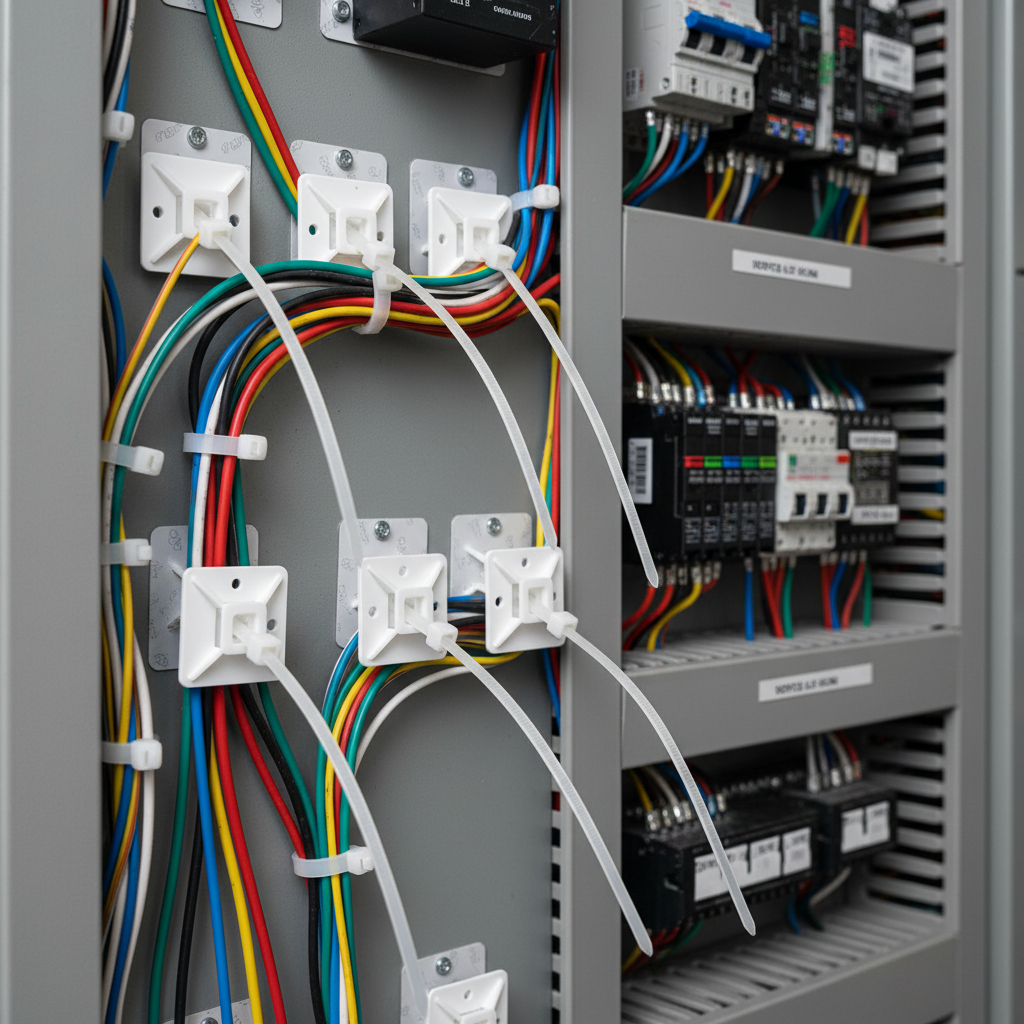
Crane wiring, gantry systems, container yard lighting and power distribution run largely outdoors, at scale, and often in coastal locations where salt air is a constant even away from the water's edge.
Our SS304 ties in 10 sizes (100×4.6mm to 550×4.6mm) cover the range from instrumentation cabling to heavier power runs.
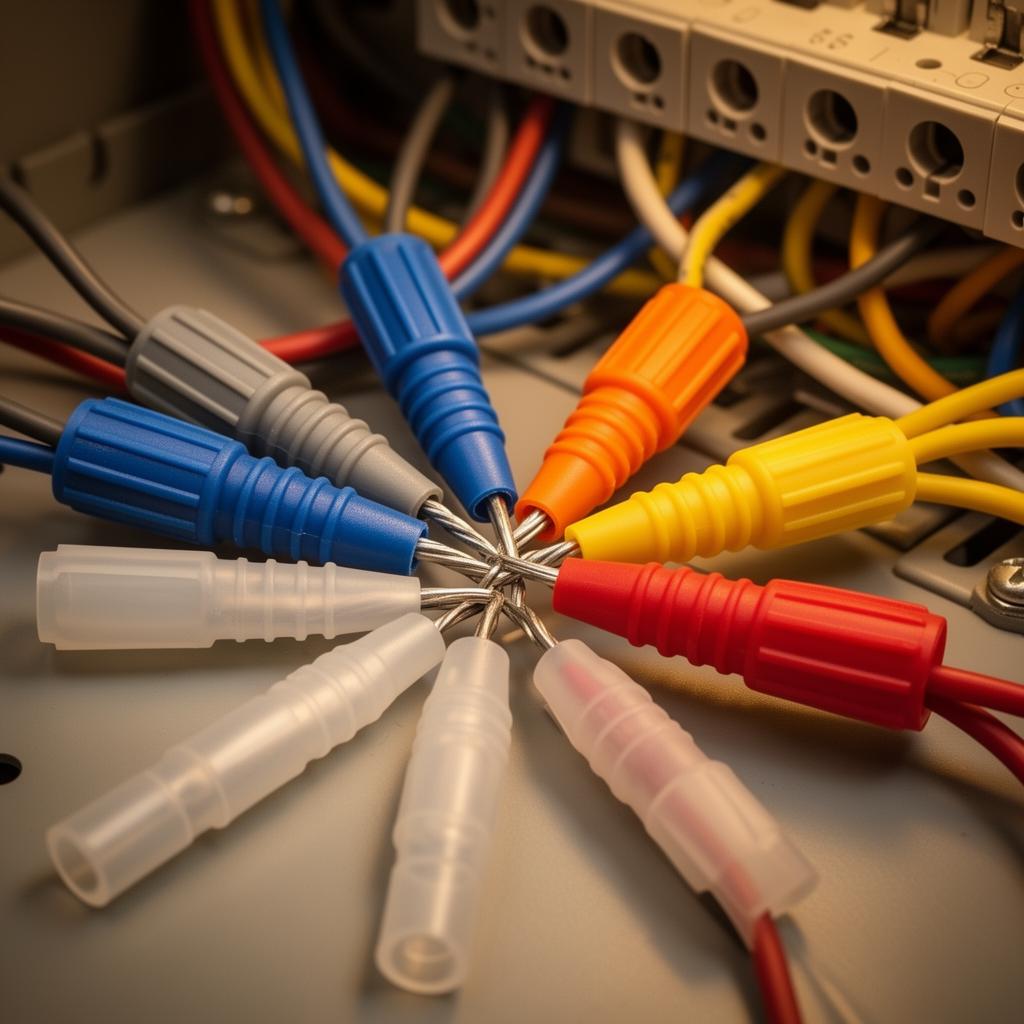
Shipboard electrical panels and machinery spaces
While more sheltered than open deck, these spaces still deal with humidity, vibration, and the same general corrosion pressure as the rest of a marine environment — a setting where standard nylon ties often underperform their rated life.
Wire nut connectors, closed-end connectors and EHI Terminals need to hold a solid termination despite constant vibration from engines and machinery. A loose crimped connection is exactly the kind of fault that's hard to trace once a panel is closed back up.
Built for the segment, not adapted from a land-based catalog
VLC developed its SS304 cable tie range specifically with solar, marine, chemical, and construction applications in mind — this isn't a general-purpose product we're repositioning for marine use. All 10 sizes are RoHS, CE, and ISO 9001:2015 certified, and we're upfront about where SS304 fits and where a project genuinely needs 316 instead, so you can specify correctly the first time.
If you're sourcing cable management hardware for a shipyard, port facility, or marine electrical project, we'd like to understand the specific exposure conditions involved so we can confirm SS304 is the right fit before you order.
Specifying for a marine or port project?
Contact us to discuss your marine or port project's material requirements.